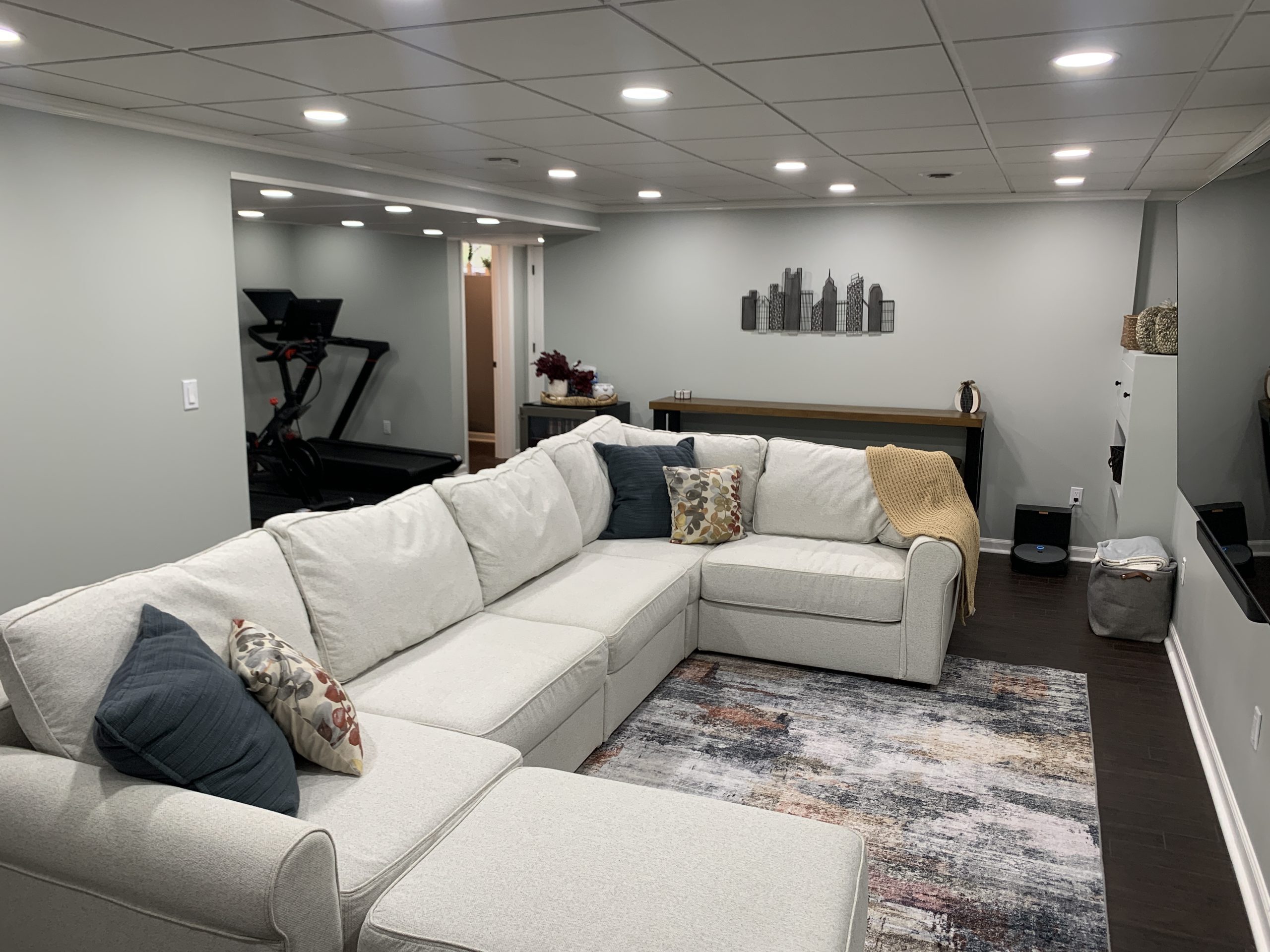

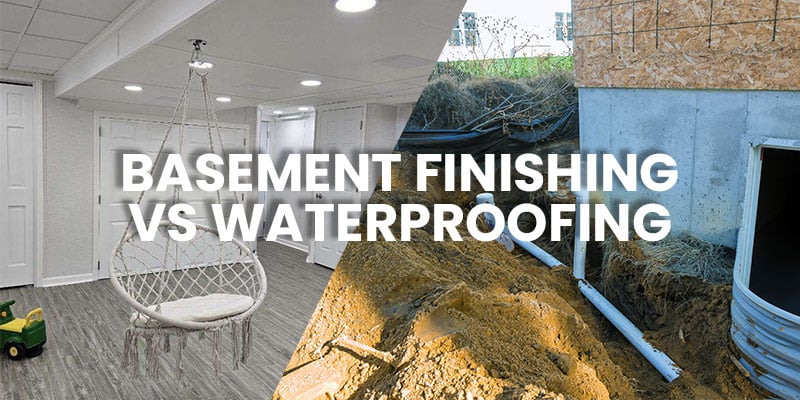
If you're planning to improve your basement, you're likely asking yourself, “Do I need to waterproof my basement before finishing it?”
When researching basement upgrades, you’ve probably come across both waterproofing and finishing. While they’re often part of the same conversation, they solve very different problems, and confusing the two can lead to costly mistakes, long-term water damage, or a finished space that doesn’t last.
At Energy Swing Windows, we’ve helped hundreds of homeowners across Western Pennsylvania understand which solutions they need, and in what order, to create a safe, comfortable, and long-lasting basement space.
In this article, we’ll clearly explain the difference between basement waterproofing and finishing, when each one is necessary, and how to avoid the most common (and expensive) missteps homeowners make during this process.
Table of Contents
Why Do Homeowners Confuse Basement Waterproofing and Basement Finishing?
Most homeowners searching these terms are trying to solve one of three problems:
- Water or moisture in the basement
- A basement that feels uncomfortable or unusable
- Fear of finishing a space that might have hidden issues
The confusion usually happens because:
- Both projects often come up during the same planning phase
- Some systems are water-resistant, which leads homeowners to assume they prevent water entirely
- Contractors don’t always explain where waterproofing ends and finishing begins
At a high level, the distinction is simple:
Waterproofing protects your basement. Finishing transforms it.
What Is Basement Waterproofing And Do You Need It in Pittsburgh?
Basement waterproofing is focused on managing or redirecting water that enters your basement, typically through the foundation.
Most waterproofing systems are designed to control water, not eliminate the presence of water entirely.
What Basement Water Problems Can Waterproofing Solve?
Waterproofing is typically used to address:
- Water seeping through foundation walls
- Groundwater pressure around the home
- Recurring leaks or pooling water
- Long-term moisture issues that can affect structure or air quality
It’s generally more about correction than prevention and managing water once it’s already making its way toward or into the basement.
What Are Common Basement Waterproofing Methods (Interior vs. Exterior)
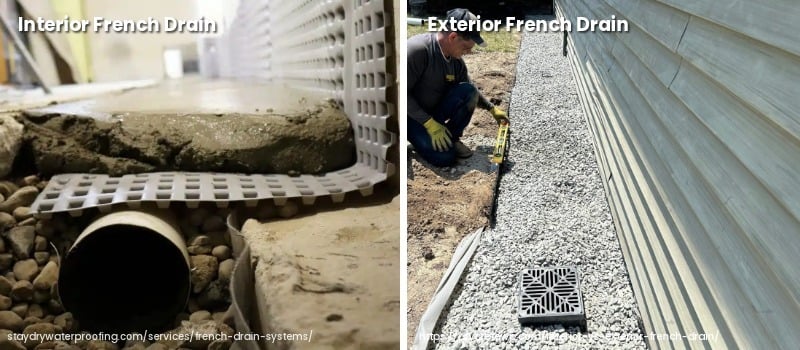
Interior Waterproofing
This is the most common approach and usually includes:
- Interior French drain systems
- Sump pumps to collect and remove water
- Vapor barriers and drainage channels
These systems allow water in, then safely move it out before it causes damage. It does not eliminate the water coming in, but instead redirects it so it exits through existing drainage or a sump pump.
Exterior Waterproofing
Exterior systems involve:
- Excavation around the foundation
- Exterior drain systems or membranes
These aim to reduce how much water reaches and goes through the foundation but are typically more invasive and expensive.
If you’re unsure whether your basement needs interior drainage before finishing, check out our full guide on when to install a French drain before finishing your basement in Pittsburgh.
Do Basement Sealants and Coatings Actually Work?
Paint-on sealants (like masonry coatings) are often misunderstood.
- They don’t stop water from entering the foundation
- Water can still build up behind the coating
- They may actually create conditions for mold growth if moisture gets trapped
Do Foundation Cracks Mean You Need Waterproofing?
Many waterproofing companies also handle foundation repair. While cracks can be caused by water, not all foundation issues are water-related and not all water issues indicate structural problems.
When Is Basement Waterproofing Necessary?
You don’t necessarily need waterproofing just because your basement feels humid or has had a one-time water event.
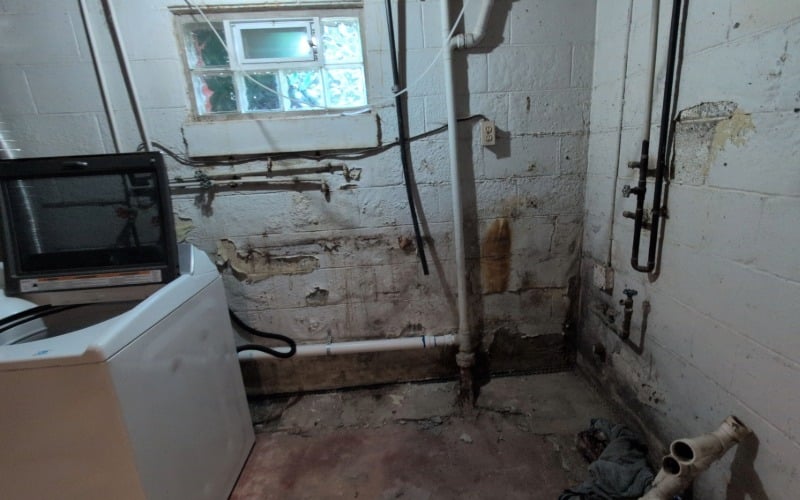
Waterproofing may be appropriate if you’ve noticed:
-
Repeated water intrusion
-
Efflorescence (white, powdery residue) on foundation walls
-
Long-term staining or discoloration
-
Persistent musty odors
-
Visible moisture or pooling water
It’s also possible for a basement to look dry but still hold moisture, especially within concrete block walls. Concrete can retain water for long periods, slowly releasing moisture into the space.
What Does It Mean to Finish a Basement (And What’s Included)?
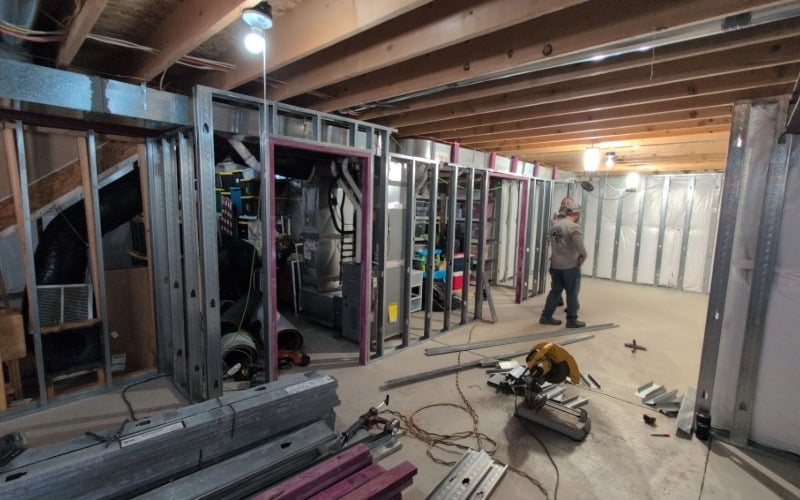
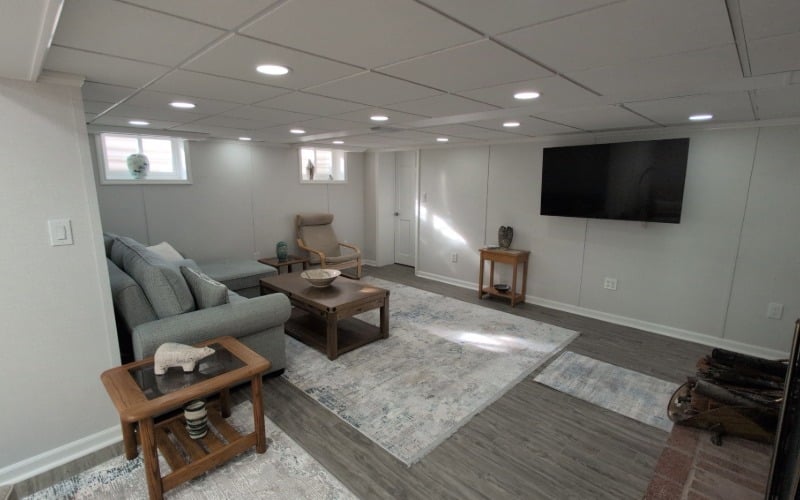
Basement finishing is the process of turning an unfinished basement into usable living space.
This typically means starting from bare concrete and exposed framing and building it out into a comfortable environment.
Finishing vs. Remodeling a Basement: What’s the Difference?
- Finishing: Completing a basement for the first time
- Remodeling: Updating or changing an already finished space
Still not sure if your project is finishing or remodeling? Learn the key differences in our article: Basement Finishing vs. Remodeling in Pittsburgh: What’s the Difference?
What’s Included in a Finished Basement?
While details vary by contractor, most finishing projects include:
- Wall panels or framed walls and finished ceilings
- Flooring systems
- Electrical outlets, switches, and lighting (per code)
- Trim and finishes
- Insulation and moisture-resistant materials
- Optional dehumidification systems
Do You Need HVAC and Egress Windows for a Finished Basement?
- Many basements use supplemental heat rather than extending existing HVAC systems
- Egress windows are typically required for basement bedrooms and are critical for safety
Basement Waterproofing vs. Finishing: Comparison Table
|
Feature |
Basement Waterproofing |
Basement Finishing |
|
Primary Goal |
Manage or redirect water |
Create livable space |
|
Addresses Moisture Risk |
Yes |
Indirectly |
|
Adds Usable Square Footage |
No |
Yes |
|
Typical Materials |
Drains, pumps, barriers |
Walls, floors, ceilings |
|
Impact on Comfort |
Limited |
High |
Can You Finish a Basement Without Waterproofing It First?
Yes, but only in some cases.
If…
-
You’ve lived in the home long-term
-
You don’t see ongoing water issues
-
Moisture and humidity levels are within normal ranges
…waterproofing may not be necessary.
However, if you’ve seen recurring water or moisture signs, most professionals recommend addressing those issues before finishing to avoid long-term damage.
What Happens If You Finish a Basement With Moisture Issues?
That depends heavily on the materials used.
Traditional materials like wooden 2x4s, drywall and fiberglass insulation:
- Absorb and hold moisture
- Can support mold growth
- May show damage and deterioration months or years later
Once finished, repairs become more expensive because materials often have to be removed to access the problem, and then be replaced.
If moisture is even a slight concern in your basement, make sure to read our article on the best types of basement finishing for moisture-prone homes.
How Do Pros Check for Moisture Before Finishing a Basement?
Common evaluation steps include:
- Moisture readings on foundation walls
- Visual inspection for staining, efflorescence, or mold
- Humidity monitoring
- Reviewing homeowner history of leaks or flooding
Local climate and soil conditions also play a role, especially in areas like Pittsburgh, where groundwater and seasonal moisture are common concerns.
Want to know what professionals actually look for during a basement finishing consultation? Here’s a breakdown of how we evaluate basement readiness at your first consultation.
Basement Waterproofing vs. Finishing Costs: What’s the Difference?
Basement waterproofing can cost anywhere from $8,000 to upwards of $30K, depending on the method of waterproofing. Energy Swing’s basement finishing projects typically range from $50K-$90K, with size being the biggest factor that affects price.
Waterproofing Costs
Costs vary widely depending on:
- System type and quality
- Company experience
- Warranty coverage
- Equipment redundancy (battery backups, dual pumps)
Waterproofing is usually a one-time investment, aside from routine sump pump maintenance.
Finishing Costs
Finishing costs are influenced by:
- Square footage
- Layout complexity
- Materials
- Labor structure and project management
Both projects can positively affect your home but in different ways.
Curious what finishing your basement might actually cost? Explore our full breakdown of the real cost to finish a basement in Pittsburgh, including what affects price and where to save.
Waterproofing vs. Finishing: Which Is the Better Investment?
- Waterproofing protects your home and prevents future loss
- Finishing adds functional square footage and lifestyle value
One without the other can limit long-term return, especially if moisture issues are ignored.
How Do You Decide the Right Approach for Your Basement?
At this point, you understand the clear difference between basement waterproofing and basement finishing, and why skipping the first can put the second at risk.
If you’ve dealt with water in your basement or just want to avoid problems down the road, knowing when (and how) to waterproof is critical. It’s not just about making your basement look good, it’s about protecting your home long-term.
Ask yourself:
- Are you prioritizing protection, comfort, or both?
- How long do you plan to stay in the home?
- How do you actually want to use the space?
A thoughtful plan (not rushing into construction) is usually the difference between a basement that simply looks finished and one that truly works long-term.
Your next step is to read: Best Basement Finishing Materials for Pittsburgh Homes (And Why We Use Them) to learn which materials hold up best in basement conditions.
At Energy Swing Windows, we help Pittsburgh homeowners evaluate their basements and guide them through finishing their basements the right way. With the right prep work, moisture protection, and materials. If you’re unsure where to begin, we’re here to walk you through it.

Frequently Asked Questions
Is waterproofing the same as damp-proofing?
No. Damp-proofing is a general term and isn’t the same as a full waterproofing system.
Can a finished basement be 100% waterproof?
No basement can be guaranteed to stay completely dry forever. Systems can fail, pumps can wear out, and extreme events can happen.
How long does basement waterproofing last?
Many systems last decades, though components like sump pumps may need replacement over time.
What’s the biggest mistake homeowners make when finishing a basement?
Not thinking through how the space will actually be used — which can lead to layouts that look nice but don’t function well.
Topics: