

Have you started looking into finishing your basement, only to realize you’re not even sure who you should hire?
Do you go with a general contractor…or a basement finishing company? And does that choice actually matter?
At Energy Swing, basement finishing is what we do every day. We’ve designed and completed hundreds of basement projects, and we’ve seen firsthand how important the right fit is, especially when finishing from scratch.
Because basement finishing is our specialty, we do have a bias. But that bias comes from experience, not just opinion. And in this article, we’ll break down the real differences between general contractors and basement specialists so you can decide for yourself.
By the end, you’ll know exactly which type of contractor is better suited for your basement, what red flags to watch for, and how to avoid costly surprises down the road.
Table of Contents
Why Is Hiring a Basement Contractor So Confusing for Homeowners?
Most homeowners struggle with this decision for two main reasons:
- Basement pricing varies wildly
Estimates can differ by tens of thousands of dollars. Sometimes shockingly low and others uncomfortably high. Without context, it’s hard to tell whether a lower price is a smart value or a red flag. - Basements are unfamiliar territory
Unlike kitchens or bathrooms, many homeowners don’t use their basement regularly before it’s finished. That makes it harder to:
-
Visualize how the space should function and be used
-
Understand what challenges might be hiding
-
Know what questions to even ask
-
That’s why many homeowners choose someone who can do the work, without realizing how different basement projects can be and how much experience in that space matters.
Why Isn’t Finishing a Basement the Same as Renovating a Kitchen or Bathroom?
Kitchens and bathrooms are familiar. You already know how you move through them and what works (or doesn’t).
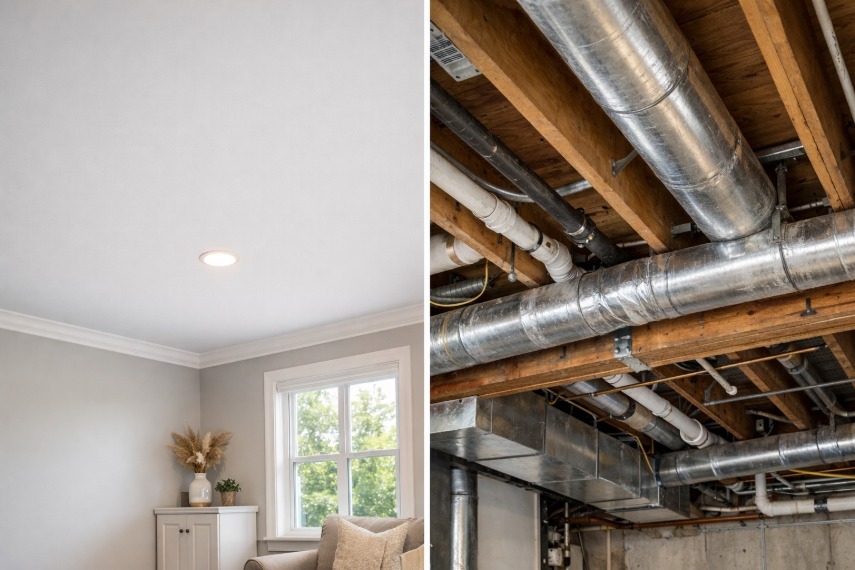
Typical drywall ceiling found upstairs in kitchens and bathrooms compared to a basement ceiling with exposed ductwork and pipes that must be planned around during basement finishing.
Basements are different:
-
They’re often the largest open area in the home
-
They’re full of obstacles (ductwork, pipes, beams, sewer lines)
-
They’re below ground, which changes how moisture, air, and temperature behave
Finishing a basement well requires intentional planning up front, especially around:
-
Layout and flow
-
Ceiling height transitions
-
Lighting zones
-
Electrical and HVAC needs
-
Comfort and durability
Without that planning, it’s easy to end up with wasted space, awkward hallways, or rooms that don’t feel comfortable to use.
What Is a General Contractor and What Do They Typically Do?
A general contractor (GC) is designed to manage a wide range of home projects, often including:
- Kitchens
- Bathrooms
- Additions
- Whole-home renovations
They usually coordinate multiple trades (carpenter, electrician, plumber) that can be in-house, but are often subcontracted and bring flexibility to complex or mixed projects.
Homeowner Tip: If a General Contractor uses subcontractors, for your own protection be sure they are licensed and covered with their own liability and worker's compensation insurance.
Many general contractors can finish a basement, but basements are rarely their primary focus.
Where General Contractors Can Be a Good Fit
A GC may make sense if:
- You’re remodeling an already-finished basement
- Your basement is part of a larger whole-home renovation
- The project requires architectural redesign beyond finishing
The key factor is how often they actually work in basements, not just whether they offer basement services.
What Is a Specialized Basement Finishing Company?
A basement finishing company focuses on one thing: finishing basements.
That specialization matters because basements come with challenges that don’t exist upstairs, including:
- Ductwork, plumbing, and beams to design around
- Concrete floors that may not be level
- Code requirements specific to below-grade living spaces
- Moisture and air-quality considerations
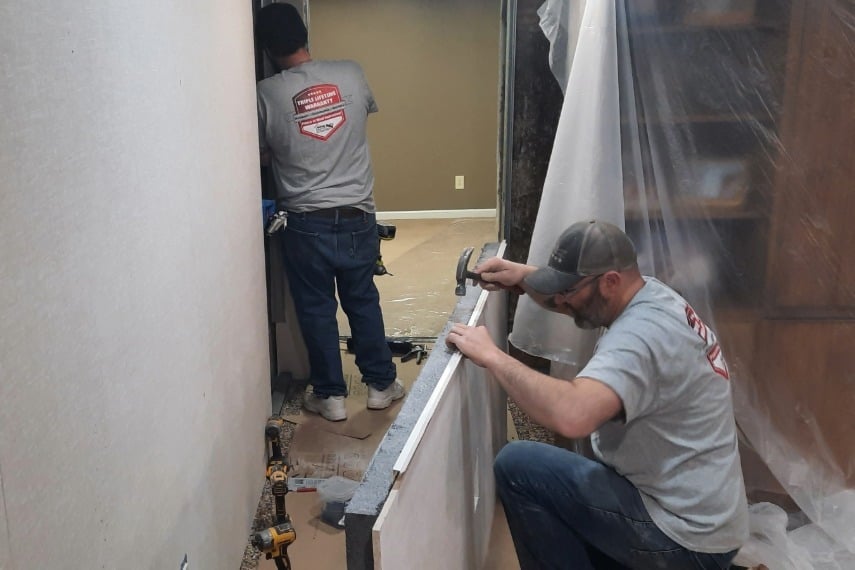
When a team works in basements every day, those challenges aren’t surprises, they’re part of the process. While general contractors may adapt their typical building approach to basement conditions, specialists build with those challenges in mind from day one.
Is Basement Finishing the Same as Basement Remodeling?
No, and this is an important distinction.
|
Feature |
Basement Finishing |
Basement Remodeling |
|
Starting Condition |
Unfinished space |
Already finished |
|
Walls & Ceilings |
Exposed foundation/joists |
Existing materials |
|
Design Flexibility |
High |
Limited |
|
Moisture Planning |
Built in from the start |
Must adapt |
|
Typical Contractor |
Basement specialist |
GC or remodeler |
|
Risk of Surprises |
Lower |
Higher |
This matters because finishing from scratch allows for better moisture planning, layout optimization, and system-based construction. Remodeling often involves compromises and different expertise.
What Are the Biggest Differences Between a General Contractor and a Basement Finishing Company?
Here’s a homeowner-friendly comparison:
|
Area |
General Contractor |
Basement Finishing Company |
|
Project Scope |
Many project types |
Basements only |
|
Basement Layout Expertise |
Varies |
Core focus |
|
Moisture Awareness |
Limited |
Built into design |
|
Trade Coordination |
Often subcontracted |
Tightly managed or in-house |
|
Accountability |
Can be shared |
Centralized |
Neither approach is “wrong” but they’re built for different types of projects.
Many homeowners find it helpful to compare some of the best basement finishing companies in Pittsburgh before making a final decision.
Which Option Is More Cost-Effective for Basement Projects?
This surprises many homeowners:
Specialized basement companies are not automatically more expensive. In many cases, they can be more efficient because:
- Crews don’t have to “figure out” basement challenges
- Layout decisions are made correctly upfront
- Fewer, expensive mid-project changes are needed
Homeowners tend to:
- Overpay when a contractor lacks basement efficiency
- Underinvest when skipping built-in wiring, lighting, or layout planning that’s hard to fix later
The real cost difference often shows up when problems become apparent after the project is finished.
Who Is Better at Preventing Long-Term Basement Problems?
Moisture, airflow, and comfort issues often start behind the walls, so it’s important to work with someone who has seen these problems firsthand and knows how to prevent them.
Basement specialists tend to recognize these issues early and plan accordingly, but any professional contractor with basement experience should be prepared to address them.
Smart Questions to Ask
-
What does the warranty cover?
-
Who handles repairs if something fails?
-
Are materials designed for basement conditions?
Which Option Has a More Predictable Timeline?
Specialized crews often move more consistently because basements are their daily focus, but availability and workload vary by contractor.
But, delays can happen and they are often because of:
- Waiting on permits
- Late design changes
- Material lead times
- Waiting on subcontractors
Which Option Is Better If Your Basement Has Never Been Finished?
For unfinished basements, specialization usually offers fewer surprises.
Common surprises discovered mid-project that can add costs include:
- Uneven concrete floors
- Outdated electrical panels
- Code issues that weren’t obvious at first glance
Experience helps contractors anticipate these issues, adjust plans without derailing the project, and budget them correctly.
.jpeg?width=855&height=570&name=Untitled%20(8).jpeg)
What Questions Should You Ask Before Choosing Either One?
Before committing, ask:
- How many unfinished basements have you finished recently?
- Who handles moisture and insulation planning?
- Who pulls permits and schedules inspections?
- What happens if something fails after completion (any warranty)?
Clear, confident answers usually reveal true experience.
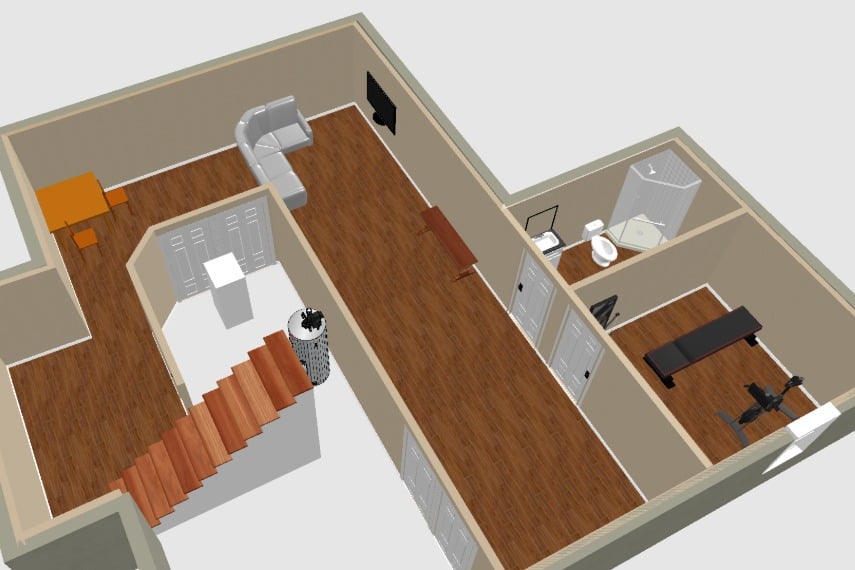
Why Does Basement Design and Layout Matter So Much?
Design is what turns a finished basement into a space people actually use.
Good planning accounts for:
- Lighting zones instead of one dark ceiling grid
- Outlet placement for real-life use
- Ceiling height transitions
- How the space supports your lifestyle
A basement shouldn’t just look finished, it should feel intentional.
How Can You Tell If a Company Truly Specializes in Basements?
Look for:
- A dedicated basement finishing service page (not just on a list)
- Extensive basement-specific photos and reviews
- A clear, repeatable process
- Comfort discussing layout, lighting, and below-ground challenges
- A dedicated and experienced installation crew, not a bunch of subcontractors
Red flags include:
- Very few basement examples
- Mostly kitchen/bath marketing
- Vague answers about moisture or layout
So, Who Is the Best Choice for Most Homeowners?
At this point, you should have a clear understanding of how general contractors and basement finishing specialists compare and which one is better suited for an unfinished basement.
|
Homeowner Situation |
Best Fit |
|
Unfinished basement |
Basement finishing company |
|
Already finished basement |
General contractor |
|
Whole-home renovation |
General contractor |
|
First-time basement finish |
Basement specialist |
|
Concerned about moisture |
Basement specialist |
Choosing between the two can feel confusing at first, especially when prices, promises, and portfolios all seem to differ wildly. But now you know what truly sets them apart: specialization, experience with below-ground challenges, and how each team manages layout, moisture, and long-term performance.
If your basement is still unfinished, working with a company that specializes in basement finishing typically leads to fewer surprises, better outcomes, and a smoother overall experience.
At Energy Swing Windows, we’ve helped hundreds of homeowners turn empty basements into comfortable, livable spaces because it’s what we do every day. If you’re ready to start planning your project or just want to ask a few more questions, we’re here to help.
Next Step: Check out our guide on “How Basement Size Affects the Cost of Finishing” so you can plan with confidence and avoid the most common budget traps.
FAQ: Hiring the Right Contractor for a Basement Project
Can a general contractor finish a basement correctly?
Yes—but experience with basements specifically matters.
Is basement finishing considered remodeling?
Not if the space is unfinished. Remodeling applies to already-finished basements.
Do basement finishing companies cost more upfront?
Not always. Costs vary based on experience, efficiency, and project scope.
Who handles moisture issues if they appear later?
That depends on the contractor and the warranty—always ask upfront.
How long does a typical basement finishing project take?
Many projects take about a month, depending on scope and complexity.
Topics: