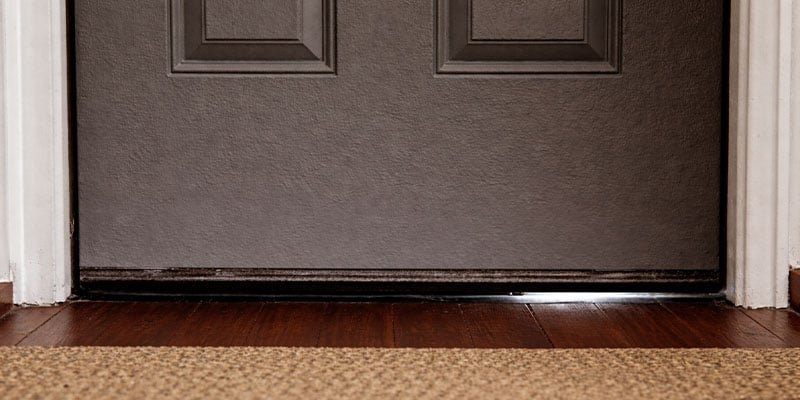
Why is my front door sticking all of a sudden? Is it just the weather? Or is something more serious going on?
In a climate like Pittsburgh’s, with its humid summers and freezing winters, these issues aren’t just annoying, they can compromise your home’s energy efficiency, security, and curb appeal. But how do you know if it’s just seasonal swelling… or a sign of real damage?
At Energy Swing, we’ve seen this happen hundreds of times. We get calls every week from homeowners asking, “Is this normal or do I need a new door?” With decades of experience installing and evaluating entry doors in western Pennsylvania, we’ve learned exactly what to look for and what to ignore.
In this guide, we’ll explain what causes entry doors to warp, stick, or crack and how to tell when it’s just a short-term nuisance versus a bigger problem. You’ll leave with clear answers, warning signs to watch for, and what to do next if your door needs more than a quick fix.
Table of Contents
What Do Warping, Sticking, and Cracking Actually Mean?
These terms get used interchangeably, but they describe very different problems.
| Problem | What It Means | Common Symptoms |
|---|---|---|
| Warping | Door slab is no longer flat in the frame | Uneven sealing, air or water leaks, visible bowing |
| Sticking | Door expands or shifts inside the frame | Hard to open or close, rubbing against the frame |
| Cracking | Structural or surface-level splits in the door | Hairline fractures, visible splits, brittleness |
Each issue has different causes, and the solution depends heavily on door material, sun exposure, and how the door was installed.
Why Do Entry Doors Warp Over Time?
Door warping doesn’t usually happen overnight, it’s the result of ongoing exposure to the elements and how a door is built to handle them. Understanding what actually causes a door to warp makes it easier to spot early warning signs and avoid long-term comfort or energy issues.
Is Moisture or Sunlight Worse for Your Door?
Moisture plays a role, but direct sunlight is often the biggest culprit.
When a door sits in strong and direct sun, especially while locked and tightly secured at the deadbolt, heat builds unevenly across the slab. Over time, that heat causes the door to bow or twist out of plane.
Moisture still matters, especially for doors with wood components. High humidity can cause materials to expand, while dry winter air can cause them to shrink. Both can add serious stress to the door over time.
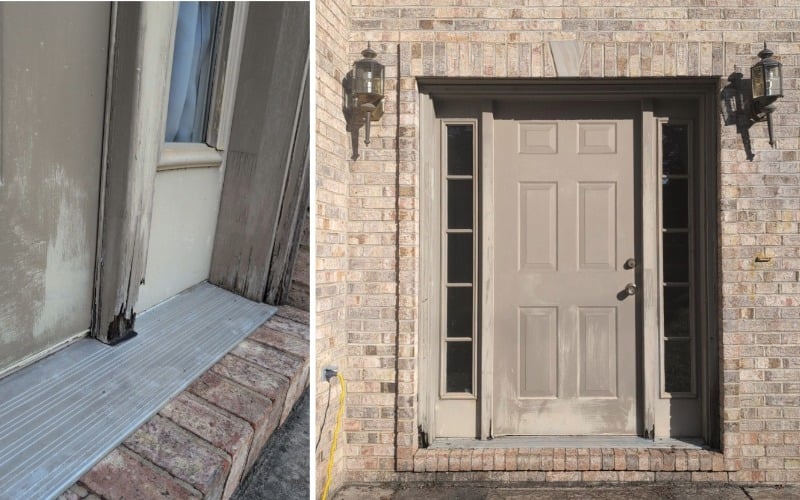 Murrysville, PA entry door experiencing extreme damage from being exposed to direct sunlight and rain.
How to Tell If Moisture is Damaging Your Door
Homeowners often notice:
- Rot or deterioration at the bottom of the door frame
- Bubbling or peeling paint on wood doors
- Soft or spongy areas near the threshold
These are signs moisture is wicking upward and affecting the door system, not just the surface.
Why the Door’s Internal Structure Matters More Than You Think
Absolutely! And this is one of the most misunderstood parts of door performance.
Many doors are sold by material name alone (“fiberglass” or “steel”), but what’s inside the door matters just as much.
- Fiberglass and steel doors may still contain wood cores
- Lower-grade doors often lack proper internal reinforcement
- Premium doors use foam cores and reinforced edge blocking to resist warping
A door with better internal structure is far more likely to stay straight over time, even in direct sun or extreme temperatures.
What Makes a Door Start Sticking or Rubbing?
In Pittsburgh, it’s not unusual for a door to work perfectly one month and start sticking the next. Between humid summers, cold dry winters, and frequent temperature swings, entry doors are constantly expanding, contracting, and shifting.
When those changes affect how the door fits inside the frame, opening and closing can suddenly feel harder than it should. Sometimes it’s just a seasonal reaction but other times, it’s a sign that the door or frame needs attention.
Could Seasonal Humidity Be the Cause?
In many cases, yes.
Warm air holds more moisture. During humid months, wood or wood-core doors absorb that moisture and expand, making the door fit too tightly in the frame. In winter, the opposite happens, materials dry out and shrink, sometimes creating gaps.
That’s why sticking often appears seasonally, then improves when conditions change.
Can Foundation Shifting Affect Door Fit?
It can and the bottom of the door is usually the giveaway.
When a home settles or shifts slightly, the threshold can go out of level. This creates uneven contact between the door sweep and the sill, often leading to drafts or visible daylight under the door.
Do Hardware Issues Cause Doors to Stick?
Hardware usually isn’t the main cause. Locks and handles should release cleanly without affecting how the door swings. If hardware is contributing, it’s often due to:
-
Bent hinges
-
Loose or stripped hinge screws
-
Misalignment caused by frame movement
Why Do Entry Doors Crack And Should You Worry?
Cracking is often less about one sudden event and more about long-term exposure. In Pittsburgh’s climate, repeated sun, temperature swings, and aging materials can slowly dry out a door’s surface, making it brittle over time. While some cracks are cosmetic, others can signal deeper material breakdown that shouldn’t be ignored.
Are Cracks Caused by Impact or Aging?
Surprisingly, most cracks aren’t caused by slamming or everyday use.
More often, cracking comes from:
- Long-term sun exposure
- Material drying out over time
- Aging finishes that can no longer protect the surface
As doors age, materials can become brittle, leading to hairline cracks. These can sometimes be enough to let light through.
How to Tell if It’s a Defect or Just Surface Wear
This depends on:
- The age of the door
- Where the crack is located
- Whether the crack is structural or only in the finish
Finish-related cracks are often covered under manufacturer warranties, but they usually require professional evaluation to determine the cause.
When Are Door Problems Normal, and When Are They a Bigger Concern?
Not every change in how your door looks or functions means something is wrong. In a place like Pittsburgh, seasonal movement is common and some door issues come and go as temperatures and humidity shift. The challenge is knowing when those changes are harmless and when they point to a problem that could affect comfort, security, or energy efficiency if left unchecked.
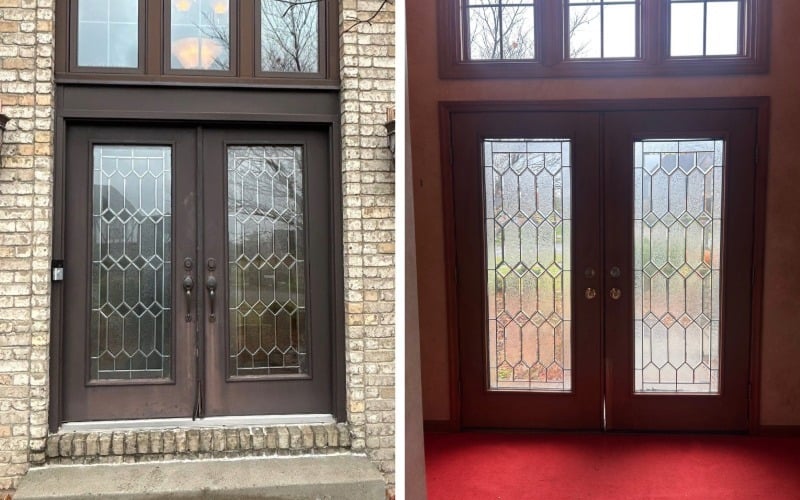
What Door Changes Are Seasonal and Temporary?
Some seasonal movement is normal:
- Slight sticking during humid weather
- Minor warping that disappears as temperatures change
Pittsburgh’s weather can make doors look problematic one week and perfectly fine the next.
Which Signs Point to Long-Term Damage or Failure?
These issues should not be ignored:
- Visible light around the door
- Air or water leaking inside
- Locks that won’t engage
- Door scraping the floor
- Structural cracks in the slab or frame
These often point to installation issues, material failure, or long-term moisture damage.
How Long Should a Front Door Actually Last?
There’s no single lifespan, because usage and exposure vary so much. But on average, a high quality entry door should last at least 30 years.
Factors that shorten door life include:
-
Heavy daily use
-
Direct sun exposure
-
Lack of overhang or porch protection
-
Lower-grade materials
-
Inadequate or no routine maintenance over time
In general:
-
Wood doors require the most maintenance and fail sooner
-
Steel and fiberglass doors, when properly installed, last significantly longer
-
Builder-grade doors tend to wear out much faster than premium systems
Can You Repair a Damaged Door, Or Should You Replace It?
This is often the point where homeowners want a clear yes-or-no answer. The reality is, it depends. Some door issues can be addressed with straightforward adjustments or small repairs. Others look minor on the surface but point to underlying problems that repairs won’t fix for long. Understanding what’s realistic to repair (and what isn’t) helps set clear expectations before investing time or money into the wrong solution.
Common Door Problems That Are Easy to Fix
- Hinge adjustments or replacement
- Weatherstripping replacement
- Threshold adjustments
- Lock or hardware replacement
- Minor cosmetic refinishing
These are typically temporary or maintenance-level fixes.
Read our guide on the top signs it's time to replace your front door to see if it's past the point of repair and you should start considering a replacement.
When Door Replacement Is the Smarter Option
| Problem | Why Replacement Is Often Needed |
|---|---|
| Major warping | The door can no longer seal consistently, allowing air and moisture intrusion. |
| Structural cracks | Cracks compromise both security and insulation performance. |
| Water-damaged frames | Moisture damage often spreads beyond the door slab into the surrounding frame. |
| Poor original installation | Core installation issues can’t be corrected with adjustments alone. |
How to Prevent Warping, Sticking, and Cracking in the First Place
Why Door Material Choice Matters
Yes, but quality matters more than the material itself.
-
Steel warps the least but needs good internal structural design
-
Fiberglass performs very well with proper internal blocking
-
Wood is the most sensitive to moisture and temperature changes
Does Installation Quality Affects Longevity?
Often, it matters more.
Proper shimming, leveling, sealing, and underlayment protection all determine how a door performs long-term. Even a high-quality door will struggle if installed poorly.
What Maintenance Makes the Biggest Difference
-
Periodic hinge checks
-
Monitoring for water damage near the bottom of the door frame
-
Keeping finishes intact, especially on sun-exposed doors
Maintenance won’t stop warping entirely, but it can slow surface breakdown.
When Should You Call a Door Professional?
Not every sticking or warped door is a serious problem, but some definitely are.
If your door’s letting in drafts, showing light at the edges, or just isn’t working like it used to, that’s more than an annoyance, it could be costing you money or compromising your security.
Now that you know the warning signs and causes, your next step is simple: Get a free evaluation from a entry door professional who knows what to look for and can help you avoid an expensive mistake.
At Energy Swing, we’ve helped thousands of Pittsburgh homeowners fix and replace their entry doors the right way.
Common Questions Homeowners Ask About Entry Doors
Why does my door only stick in the summer?
In warmer months, Pittsburgh’s higher humidity causes door materials, especially wood or wood-core doors, to absorb moisture and expand. That expansion makes the door fit more tightly in the frame, which can lead to rubbing or sticking. When the air dries out in winter, the opposite often happens, and the door may loosen again.
Will weatherstripping fix a warped door?
Weatherstripping can help improve the seal around a door, but it won’t correct the warp itself. In some cases, adjusting or replacing weatherstripping may reduce drafts temporarily. However, if the door slab is warped, sealing issues will usually return as temperatures change.
Can I sand down a sticking door?
Sanding can make a sticking door easier to open in the short term, but it often creates new problems later. When colder, drier air causes the door to shrink, the sanded areas can turn into noticeable gaps that let in cold air. That’s why sanding is usually considered a temporary or last-resort fix.
Does homeowners insurance cover door damage?
Most homeowners insurance policies don’t cover damage caused by normal wear and tear, aging, or long-term exposure to the elements. Coverage is typically limited to sudden, covered events, such as storm damage or a break-in. It’s always best to check directly with your insurance provider to understand what applies to your situation.
Topics:

.jpg?width=1200&height=550&name=Copy%20of%20Copy%20of%20ESW%20Collage%20Template%20(3).jpg)