

Have you been saying, “We’ll deal with the windows and doors in the spring”?
Well, you’re not alone. Many homeowners in Western PA (places like Greensburg, Monroeville, Bethel Park, and Irwin) feel like spring is the ‘safe’ time to begin. But did you know that delaying your window and door project until then could mean higher costs and long delays?
But here’s the catch: spring is often when delays, backlogs, and higher costs begin. Understanding how timelines, lead times, and seasonal demand really work can help you avoid frustration and make a more confident decision.
In this guide, we’ll help you understand how timelines really work, what to expect by season, and how to save time, money, and stress by starting now.
What's In This Article?

Why Do So Many Homeowners Wait Until Spring for Window and Door Replacement?
Winter tends to highlight everything that’s wrong with aging windows and doors:
-
Cold drafts near windows and exterior doors
-
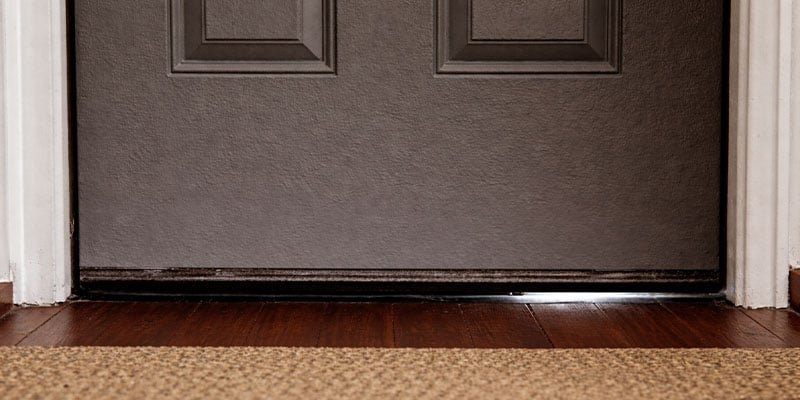
Doors that don’t close or seal properly
-
Rising heating bills
-
Condensation or moisture issues
These winter pain points often push homeowners to start researching replacement options, but many still wait until spring to act.
Common misconceptions include:
-
You can’t replace windows or doors in cold weather
-
Spring weather is safer for installation
-
Lead times are shorter once winter ends
In reality, these assumptions often delay projects rather than improve them.
Is Waiting Until Spring Really the Safer Choice for Window and Door Replacement?
If replacing your windows and door is a project you know you want to happen, you are better off meeting with contractors now to begin getting quotes, especially if you want your products installed in the spring.
|
Factor |
Planning Now (Winter) |
Waiting Until Spring |
|
Lead Time |
6–8 weeks |
9–12+ weeks |
|
Product Access |
Full availability |
Risk of supply-chain delays |
|
Pricing |
Current rates, possible promos |
5–10% higher after Q1 |
|
Scheduling |
Flexible |
Limited, high-demand |
|
Energy Savings |
Immediate |
Additional winter loss |
Many of the reasons homeowners wait are based on outdated assumptions, especially the idea that winter installs aren’t safe or effective. In reality, windows can be replaced in winter with the right process and preparation.
How Long Does It Really Take to Get New Windows or Doors Installed?
One of the most misunderstood parts of window and door replacement is lead time. The period between ordering your products and installation day.
Typical lead times vary by season:
|
Season |
Avg Lead Time |
Price Trends |
Product Availability |
|
Winter |
6–8 weeks |
Lower / steady |
High (lots in stock) |
|
Spring |
9–12+ weeks |
Higher (annual increases) |
Low (backorders common) |
As spring demand increases, even standard products can go on backorder, and installers’ calendars fill quickly.
In communities like Murrysville, Plum, or North Huntingdon, local installers often book out three-to-four months in advance once the weather turns mild.
If you want a March or April installation, you often need to order in January or early February.
Factors that affect lead time include:
- Custom sizes and configurations
- Material supply-chain interruptions
- Interior and exterior color selections
- Built‑in blinds or specialty glass
- Manufacturer demand and installer availability
As demand increases in spring, even standard products can experience delays.
What Happens If You Wait Until Spring to Order Your Windows or Doors?
Homeowners who wait until March or April to start the process are often surprised to learn their installation won’t happen until late spring tor summer.
Why delays happen:
-
Manufacturers receive a surge of orders
-
Popular products go on backorder
-
Installation schedules fill faster than quality crews can expand
Some companies increase volume by hiring temporary subcontractors during busy seasons. Others intentionally limit how many projects they take on to maintain consistent quality, which means fewer open installation slots once schedules fill.
Is Winter Actually a Bad Time to Install Windows or Doors?
No, but winter installations are approached with more strategy in mind.
During cold‑weather installs:
-
Old units stay in place until new ones are ready
-
The full opening is there without a window for a short time
-
Only one opening is worked on at a time
-
Exposure is minimized to protect indoor temperatures
-
Interior and exterior finishing work takes most of the time
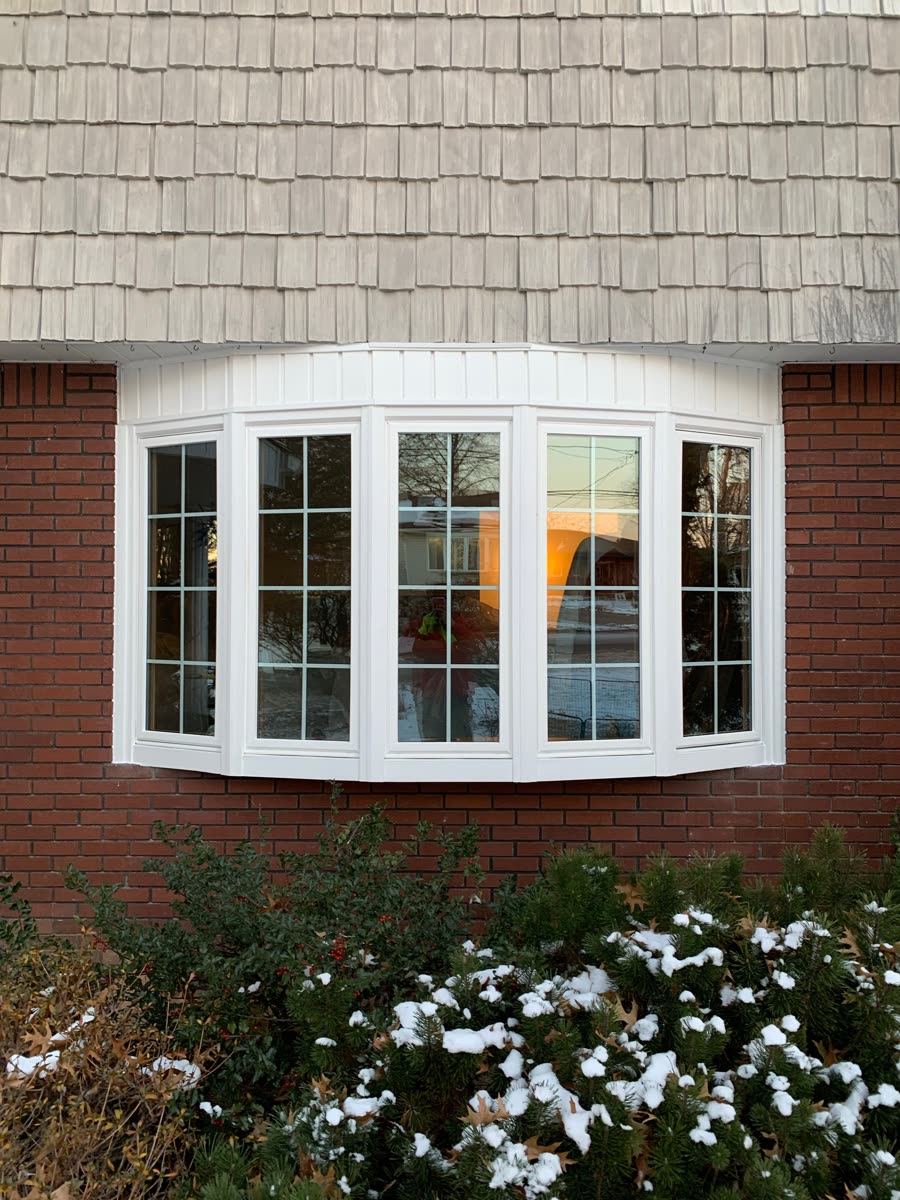
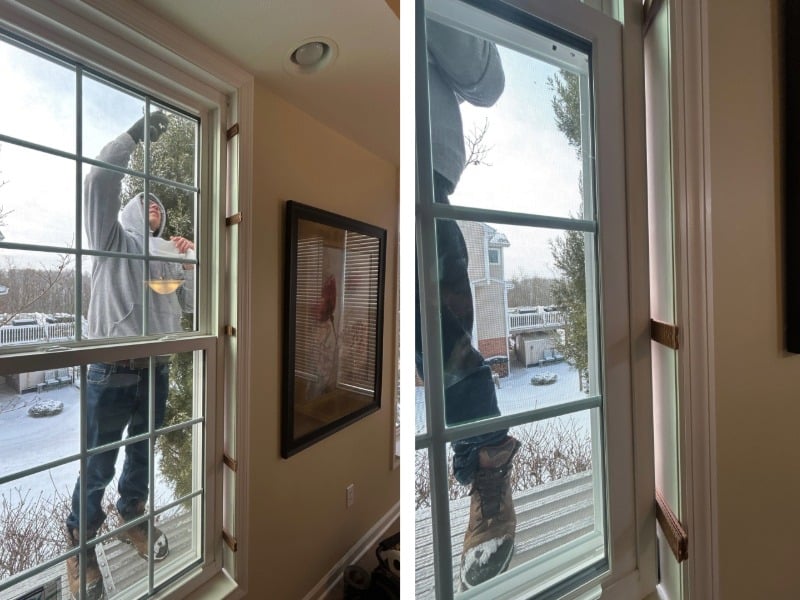 Here is a great example of how much of a gap is left open during replacement before the final interior and exterior finishing work is applied.
Modern sealants, foams, and installation methods are designed to perform in cold conditions when applied correctly. The key factor isn’t the season, it’s the experience of the installer and the quality of materials used.
Ultimately, a successful winter installation comes down to preparation, materials, and technique, which is why understanding what actually happens during a professional window installation can make the timing feel far less intimidating.
What Are the Benefits of Replacing Windows or Doors Before Spring?
For many homeowners, yes.
Benefits of off‑season planning may include:
- Shorter production and installation lead times
- More flexible scheduling options
- Avoiding annual spring price increases
- Occasional off‑season promotions
Even homeowners who prefer a spring installation often benefit from planning in winter to secure price savings, product availability, and installation dates.
Will Waiting Until Spring Increase the Cost of Your Window or Door Project?
For many homeowners, waiting until spring feels like the “safe” financial choice. But in reality, delaying a window or door replacement project can quietly increase your total cost in a few key ways.
1. Annual Price Increases
Most manufacturers raise prices 5–7% in late winter or early spring at a pace that is faster than inflation. A project quoted in January may cost more by April, even if nothing changes.
2. Energy Loss Costs
Drafty windows and poorly sealed doors not only affect comfort, but they also do some damage to your utility bills. During winter months, inefficient openings can allow heated air to escape and cold air to enter, forcing your system to work harder.
For some homes, that can mean hundreds of dollars in added heating costs before spring even arrives. Waiting doesn’t freeze those losses; it just extends them.
3. Higher Seasonal Demand = Fewer Savings
As spring approaches, demand spikes. Contractors' schedules fill quickly, and manufacturers receive a surge of orders. During peak season:
- Promotions and off-season incentives often disappear
- Installation calendars become less flexible
- Homeowners have less leverage to adjust timelines or pricing
You’re not just paying more, you’re also competing with more buyers for the same products and installation dates.
Bottom line: Even if you prefer a spring installation, starting your project in winter often saves money and secures your first-choice products and timeline.

Can Starting Your Window or Door Project Earlier Save Money and Stress?
Yes. Starting your window or door project now gives you more control, fewer surprises, and better financial outcomes.
Here’s what early planning gives you:
-
Time to compare products, contractors, and pricing without rushing
-
Access to full product availability (and quickly), before spring backorders hit
-
Lower risk of price hikes, since you can order before annual increases
-
More choice on installation dates, instead of competing with peak-season demand
It also gives you a little breathing room. Instead of rushing decisions or reacting to problems in April or May, you're working on your schedule with fewer trade-offs, delays, or regrets.
If you're already seeing issues like drafts, rising energy bills, or poor seals, those problems won't wait for spring. Starting now helps you stay ahead and save more in the long run.
When you slow the process down and plan ahead, affordability becomes less overwhelming, particularly when you understand the different ways homeowners can make window and door replacement more manageable.
How Should You Prepare Now If You’re Planning a Spring Window or Door Project?
If spring is your goal, winter is the smartest time to prepare.
A simple planning checklist:
- Research and shortlist 1–2 trusted contractors
- Schedule in‑home consultations
- Ask about lead times for your specific products
- Finalize colors, styles, and configurations early
- Secure your spot on the installation calendar
Early planning allows you to focus on quality and fit—not availability pressure.
Ready to Avoid the Spring Rush for Window and Door Replacement?
If you’re already feeling drafts, rising energy bills, or sticky doors, those issues aren’t going to fix themselves, and spring may only make them worse.
Starting your window or door replacement project earlier helps you avoid seasonal delays, lock in current pricing, and fix comfort and efficiency issues before they grow.
As a trusted window and door replacement specialist serving Western Pennsylvania, Energy Swing has helped thousands of homeowners make smarter, better-timed decisions for their homes.
Now’s the time to act.
Book your free consultation today to compare lead times, secure pricing, and make the most informed choice for your home on your terms.

Frequently Asked Questions About Window and Door Replacement Timing
1. Can windows and doors really be installed during winter in Western Pennsylvania?
Yes. Windows and doors can be safely installed in winter when modern materials and experienced installers are used.
High-performance sealants and foams are designed to cure in cold temperatures, and professional crews replace openings one at a time to minimize heat loss and protect your home throughout the process. Read about winter window installation and how it affects your home. As a bonus, winter installations often come with more flexible scheduling and shorter lead times.
2. How long does it take to install new windows or doors in a typical home
Most window or door replacement projects are completed in one to two days, depending on the number of openings and project complexity. Larger homes or multi-room projects may take longer, and winter installations are typically handled one opening at a time to maintain indoor comfort while ensuring proper installation. Here’s what you expect on window or door installation day with Energy Swing.
3. Is it cheaper to replace windows or doors during the off-season?
Often, yes. Many manufacturers implement annual price increases in late winter or early spring, so ordering before that change can save you money. Some companies also offer off-season promotions, flexible financing, or bundled discounts in slower months.
4. When is the best time to start a window or door replacement project if I want a spring installation?
If you want a spring installation, the best time to start planning is winter.
Most window and door orders take 6–12 weeks from consultation to installation, especially for custom styles or finishes. Starting now lets you secure your preferred products, dates, and pricing before demand spikes. Read here why custom doors take 8-12 weeks from consultation to installation.



.jpg?width=1200&height=550&name=Copy%20of%20Copy%20of%20ESW%20Collage%20Template%20(3).jpg)