If you’ve started getting quotes for a new front door, you may have noticed something frustrating:
Some proposals are detailed and easy to understand… while others feel vague, incomplete, or even confusing.
One contractor might hand you a full breakdown of materials, installation, and warranty, while another just writes “36x80 door – installed” with a price.
The problem? Those two proposals are not the same and choosing the wrong one could cost you thousands in surprises later.
At Energy Swing, we’ve reviewed hundreds of door proposals with Pittsburgh area homeowners, and we consistently see the same missing details that lead to confusion and bad decisions.
In this guide, you’ll learn exactly what a complete door proposal should include, what contractors often leave out, and how to spot red flags before you sign anything.
Table of Contents
- Why Do Some Door Quotes Feel Vague?
- What Should a Door Quote Include?
- How Do I Know What Door I’m Getting?
- Are Glass & Hardware Details Included?
- How Will My Door Be Installed?
- What If There’s Rot or Damage?
- Is Removal & Cleanup Included?
- Are Energy Ratings Listed?
- Will I Get a Written Warranty?
- What Does the Manufacturer Warranty Cover?
- What Does the Labor Warranty Cover?
- Are Pricing & Payment Terms Clear?
- What Are Red Flags to Watch For?
- What Questions Should I Ask?
- How Do I Compare Door Quotes?
- Final Takeaway

Why Is My Door Quote So Vague Even If the Price Looks Good?
Because many proposals don’t clearly explain what you’re buying.
As one of our long-time Client Consultant explained, some contractors don’t even provide proposals at all. They may simply write down a price or provide a generic quote from a home center without explaining:
- The exact door model
- What materials are included
- How it will be installed
- What happens if something goes wrong
A door proposal shouldn’t just list a price. It should document the entire system: product, installation, and protection.
What Should Be Included in a Professional Door Quote?
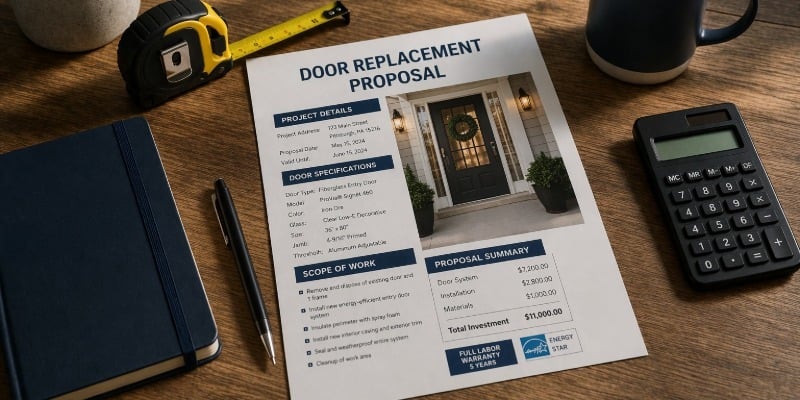
At minimum, every professional proposal should include:
- Homeowner name and project address
- Date of proposal
- Contractor name, license, and insurance details
- Manufacturer name and specific door model
- Total project cost
- Estimated lead time and installation window
If this information isn’t clearly written, that’s your first red flag. But that’s just the beginning.
How Do I Know Exactly What Door I’m Getting?
A vague line like “36x80 fiberglass door” is not enough. This kind of limited description can set you up with problems down the road.
A proper door proposal should list detailed specifications like:
- Door material (fiberglass, steel, wood)
- Grade of fiberglass or steel
- Insulation core type
- Slab thickness
- Exact size (including custom width, height, and jamb depth)
- Threshold type
- Interior and exterior colors
- Trim and casing details (inside and outside)
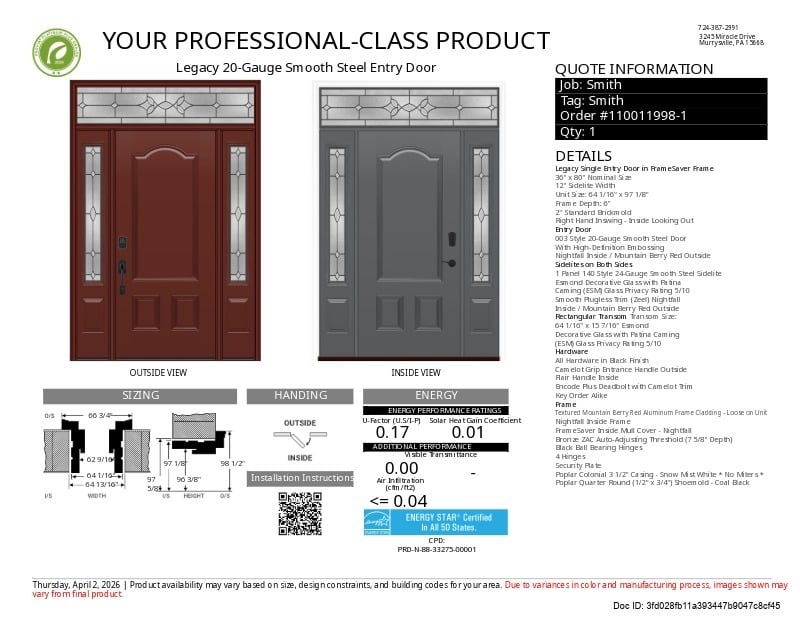
Homeowners should be able to see the full “makeup” of the door system including the frame, jamb construction, and energy performance data.
If it’s not written down, it’s not guaranteed it’s going to happen.
Does My Door Quote Include Glass, Hardware, and Design Details?
Glass and hardware are two of the biggest variables in both price and performance, and they’re often under-explained.
What looks like a small design choice can significantly impact privacy, energy efficiency, and total cost.
Your proposal should clearly specify:
- Glass collection name and style
- Size and shape
- Privacy level (clear, semi-private, obscure)
- Low-E coating (if included)
- Energy performance of the glass package
You can’t judge privacy level from a catalog photo alone. Obscurity matters, especially in residential neighborhoods.
Hardware should also be clearly defined:
- Brand
- Finish
- Mechanical warranty
- Anti-tarnish coverage
Without these details, it’s difficult to compare quotes or understand what you’re actually paying for.
Find a full breakdown on the top decorative glass options our Energy Swing clients choose for 2025.
Does My Quote Explain How the Door Will Actually Be Installed?
Installation is where many door projects succeed or fail.
A high-quality door installed poorly will still lead to drafts, leaks, and long-term problems.
Your proposal should clearly explain how the door will be installed, including:
- Is this a full-frame replacement or insert installation?
- Is the existing jamb being removed?
- What insulation is used around the perimeter?
- Is spray foam included?
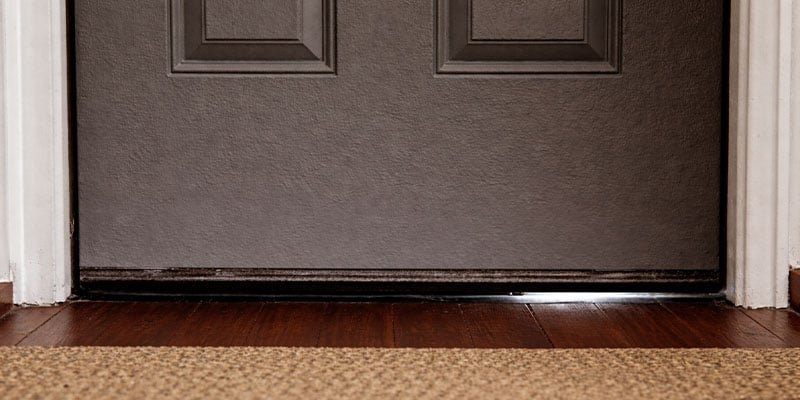
- Is under-threshold protection installed?
- Is the exterior frame going to be covered and sealed against water and air infiltration?
- Is new interior casing included?
- Is the door going to be supported and shimmed?
- Is trim painted or stained?
A brand-new door slab installed into an old, 40-year-old deteriorating frame is not the same as a full replacement. Without these details, you don’t know what you’re actually getting.
For deeper insight, read our guide on What to Expect During Window & Door Installation.
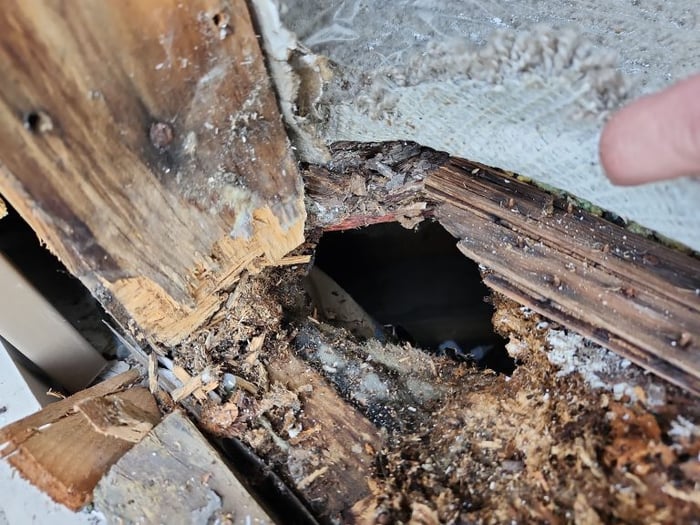
What Happens If There’s Rot or Damage Around My Door?
Front doors are common areas for hidden water damage.
A good proposal should clarify:
- What happens if rot is discovered
- How change orders are handled
- What level of repair is included
- When structural contractors are required
Soft or spongy flooring near a threshold can indicate deeper issues.
Transparency here prevents mid-project surprises.
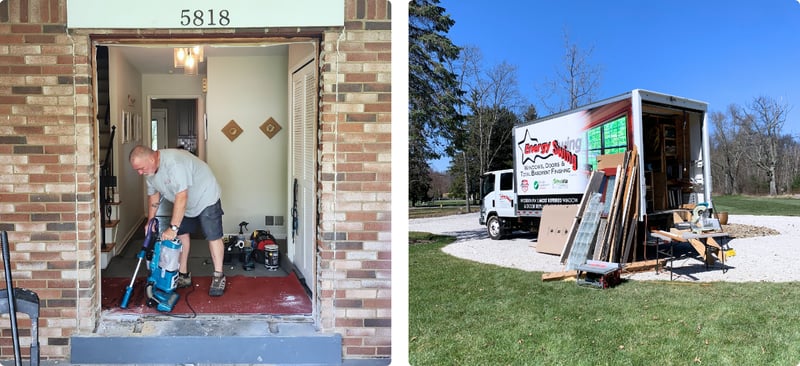
Will My Old Door Be Removed and Cleaned Up After Installation?
Cleanup and disposal might seem like small details, but they can quickly become your problem if they’re not clearly included.
Not all contractors automatically handle removal and cleanup, so it’s important to see this spelled out in writing.
Your proposal should specify:
- Removal of old door and frame
- Removal of storm doors (if applicable)
- Disposal of debris
- Interior and exterior cleanup process
Some contractors leave debris at the curb which can become your problem if it’s not picked up. If it’s not written in the proposal, don’t assume it’s included.
Does My Door Quote Actually Show Energy Efficiency Ratings?
Simply seeing the phrase “energy efficient” in a proposal isn’t enough. It doesn’t tell you how the door will actually perform in your home.
True energy performance comes down to measurable ratings, not marketing language.
Your proposal should clearly list:
- U-factor (how well the door prevents heat loss)
- ENERGY STAR® qualification
- Glass performance data (if applicable)
- Whole-unit energy rating (not just the slab)
These numbers directly impact how comfortable your home feels and how hard your HVAC system has to work. Two doors can look identical but perform very differently depending on the glass size and Low-E options.
Will I Get a Written Warranty with My Door Proposal?
A warranty isn’t just a formality, it’s your long-term protection if something goes wrong.
If the warranty isn’t clearly documented, you don’t actually know what’s covered or what isn’t.
You should receive a full written copy of both the manufacturer warranty and the labor (workmanship) warranty before moving forward.
Not a verbal summary.
Not “it’s lifetime.”
Not “don’t worry, you’re covered.”
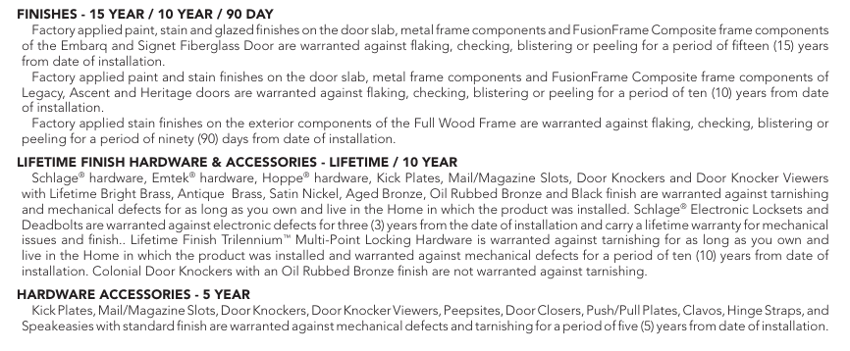
What Does a Door Manufacturer Warranty Actually Cover?
Your proposal should include (or attach) warranty language covering:
- Door slab
- Glass seal failure
- Finish
- Jamb system
- Threshold
- Hardware components
- Length of coverage
- Transferability
- Conditions that void the warranty
Example of ProVia Warranty
Get the full look at ProVia’s entry door warranty to see how they protect your investment.
What Does a Workmanship Warranty Cover on a Door Installation?
This is separate from manufacturer coverage.
You need to know:
- Who covers installation errors?
- How long is workmanship covered?
- Are service calls included?
- Is there a trip charge after a certain period?
If the door fails due to improper installation, the manufacturer will deny the product warranty claim.
A written labor warranty protects you from that gray area.
Does My Door Proposal Clearly Explain Pricing, Deposits, and Payments?
Clear payment terms protect you from confusion and unexpected financial surprises.
If pricing, deposits, and payment schedules aren’t clearly outlined, it can lead to misunderstandings later in the project.
Your proposal should clearly define:
- Deposit amount
- Payment schedule (when payments are due)
- Accepted payment methods
- Financing options (if available)
- Cancellation terms
It’s also normal to receive multiple quotes if you’re comparing different door styles or glass options. What’s not normal is unclear pricing or vague payment expectations.
What Are the Biggest Red Flags in a Door Proposal?
Watch for:
- No exact door size listed
- No installation details
- No written warranty
- Vague phrases like “standard install”
- No trim or casing information
- No disposal or cleanup mention
A quote written as “36x80 white door – installed” for $5,600 isn’t comparable to a detailed proposal.
You can’t compare apples to apples if one proposal doesn’t list the apples.
What Questions Should I Ask Before Saying Yes to a Door Quote?
Here are smart questions to ask:
- Can I see a copy of the manufacturer warranty?
- What is your workmanship warranty?
- Are installers employees or subcontractors?
- What insulation is used?
- Is under-threshold protection included?
- What happens if rot is discovered?
- Is interior casing replaced?
- Is the jamb brand new?
These were specifically highlighted as important in the transcript.
How Do I Compare Door Quotes Side by Side?
Break them into categories:
|
Category |
Proposal A |
Proposal B |
|
Door Specs |
||
|
Glass Details |
||
|
Installation Scope |
||
|
Energy Ratings |
||
|
Manufacturer Warranty |
||
|
Labor Warranty |
||
|
Cleanup Included |
Comparing by category makes differences visible quickly.
Final Takeaway: The Details Matter More Than the Door
At the end of the day, a door proposal isn’t just about choosing a style, it’s about understanding exactly what you’re getting and how it will perform over time.
The difference between a vague quote and a detailed proposal can mean the difference between a smooth project and unexpected issues down the road.
Now that you know what to look for, from installation details to warranty coverage, you’re in a much better position to compare proposals with confidence and avoid costly surprises.
Your next step is to review your current quote (or get one) and see how it stacks up against everything outlined here.
And if you want a fully transparent, detailed proposal that walks you through every part of the project, you can schedule a consultation with our team. We’ll make sure nothing is left unclear.
Frequently Asked Questions About Door Proposals
What should a door replacement proposal include?
A complete door proposal should include detailed door specifications, glass and hardware selections, installation scope, energy efficiency ratings, warranty coverage, cleanup, and clear pricing terms. If any of these are missing, it can lead to confusion or unexpected costs later.
Why do some door quotes seem so vague?
Some contractors provide minimal details or only list a price without explaining what’s included. Without clear specifications, installation details, and warranty information, it’s difficult to understand what you’re actually getting.
Should I get a copy of the door warranty before signing?
Yes, you should always receive a written copy of both the manufacturer warranty and the labor (workmanship) warranty. Verbal explanations are not enough to fully understand what’s covered.
What’s the difference between a manufacturer warranty and a labor warranty?
A manufacturer warranty covers defects in the door components (like the slab, glass, or finish), while a labor warranty covers installation-related issues. Both are important for full protection.
Are energy efficiency claims on door quotes always accurate?
Not always. Energy efficiency depends on the full door configuration, including glass size and coatings. You should ask for documented ratings like U-factor and ENERGY STAR® qualification rather than relying on general claims.
What are the biggest red flags in a door proposal?
Major red flags include missing installation details, no written warranty, vague language like “standard install,” no exact door size, and no mention of cleanup or disposal. These gaps can lead to misunderstandings or added costs.
Can two door quotes for the same brand be very different?
Yes. Even if the brand is the same, differences in installation quality, materials, glass options, and warranty coverage can significantly impact price and performance.
How do I compare door proposals fairly?
Break each proposal into categories like door specifications, installation details, warranty coverage, and energy ratings. Comparing line-by-line helps you see what’s actually included beyond just price.
Topics:

.jpg?width=1200&height=550&name=Copy%20of%20Copy%20of%20ESW%20Collage%20Template%20(3).jpg)